The 5 Best Core and Pelvic Floor Support Tools of 2026, According to Real moms
After polling the moms in the our community, the Original KT Tape precut strips as voted the best core and pelvic floor support product. Stretched across your belly, this tape cues you to re-engage your core all day long. Below are all five picks.
This post contains affiliate links. As an Amazon Associate I earn from qualifying purchases, at no extra cost to you.
Our Top Picks
Best for Core Cueing: Original KT Tape Precut Strips
Best Pregnancy Belly Support: NeoTech Care Pregnancy Belly Band
Best for Early Postpartum: Frida Mom Postpartum Abdominal Support Binder
Best Everyday Support: CRZ YOGA Maternity Leggings
Best for Sitting Comfort: CloudBliss Donut Pillow
Why Trust These Picks
I'm Mayra, a prenatal and postpartum yoga instructor at Ima Yoga Method, and I teach core and pelvic floor work to pregnant and postpartum moms every single week. These picks come from what I use with my own body, what I recommend to students, and what actually gets used instead of shoved in a closet.
I'm also honest about the limits of support gear. None of these tools build strength on their own, and I'll tell you exactly where each one stops helping.
Best for Core Cueing: Original KT Tape Precut Strips
Kinesiology tape is the tool people are most surprised to see on a pelvic floor list. The magic isn't compression, it's feedback. When the tape stretches across your abdomen as you move, that little tug is a reminder to draw your core back in and stop letting your belly hang forward.
That matters because most of us lose the connection to our deep core long before we notice. A gentle cue every time you bend, lift, or stand up does more for you over a week than one focused workout.
It's also the least restrictive option here. You can wear it through a full day, a workout, and a shower without feeling squeezed.
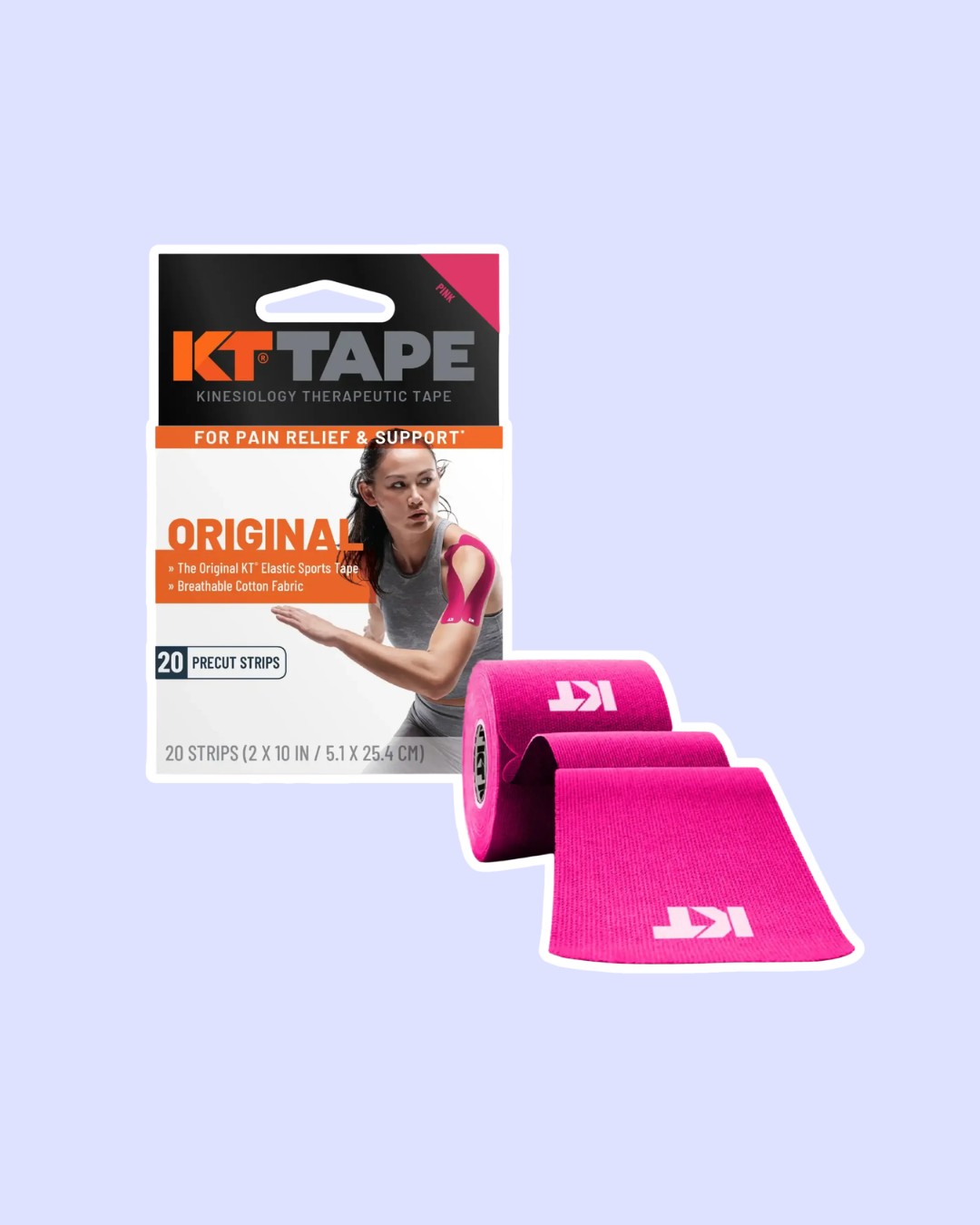
"It’s like a little reminder to engage my core where I need it the most." - Tiff (4 months postpartum)
How to tape: I walk through my exact taping method step by step here: [Postpartum] & [Prenatal]
Loved for:
Cues core re-engagement all day without you thinking about it
Precut strips, so no scissors and no guesswork
Breathable and low profile enough to wear under clothes
Keep in mind:
Takes a little practice to place correctly, so watch a tutorial first
If you take close to or above the ribs, some people can feel neck strain
Not a fit for anyone with a known adhesive sensitivity
Key details: Precut strips, ready to apply straight from the roll.
Best Pregnancy Belly Support: NeoTech Care Pregnancy Belly Band
By the third trimester, the weight of your belly pulls your pelvis forward and your low back into a deeper arch. A belly band lifts some of that load so your back and pelvic floor aren't absorbing all of it.
I recommend it for the parts of the day that are hardest on you, like a long walk, a work shift on your feet, or errands with a toddler in tow. Not for lounging on the couch.
The relief is real, and so is the trade-off. Wear it constantly and your deep core gets very comfortable letting the band do its job.
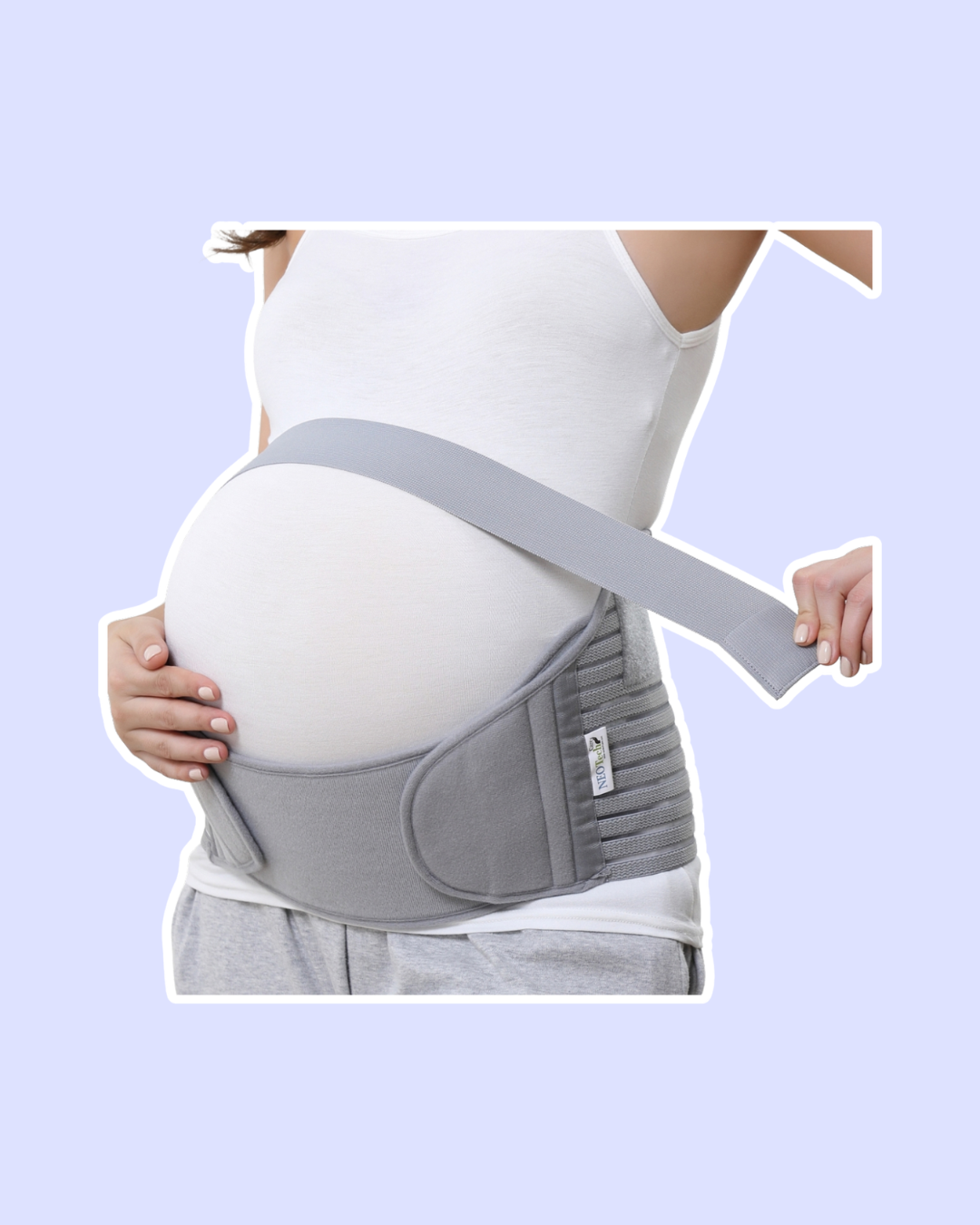
“Having a belly band in those last few weeks is the only way I felt comfortable”-Danny, 2 weeks postpartum
Loved for:
Noticeably less low back and pelvic pressure during long days on your feet
Adjustable, so it grows with you through the third trimester
Sits under clothes without much bulk
Keep in mind:
Meant for support during activity, not all-day wear
Can ride up or roll if it isn't snugged correctly
Sizing varies by brand, so check the size chart before ordering
Key details: Adjustable band available in multiple sizes.
Best for Early Postpartum: Frida Mom Postpartum Abdominal Support Binder
Those first couple of weeks postpartum, your midsection can feel unnervingly untethered. A binder gives you a sense of being held together, which helps a lot with standing up, walking around, and moving after a cesarean.
Use it early on if it makes you more comfortable. Please don't use it as a substitute for building your core strength back. Compression is not the same thing as strength, and a binder worn for months can quietly delay the work your body actually needs.
My honest guidance: lean on it in the early weeks, then start weaning off as you begin gentle breath and core work.
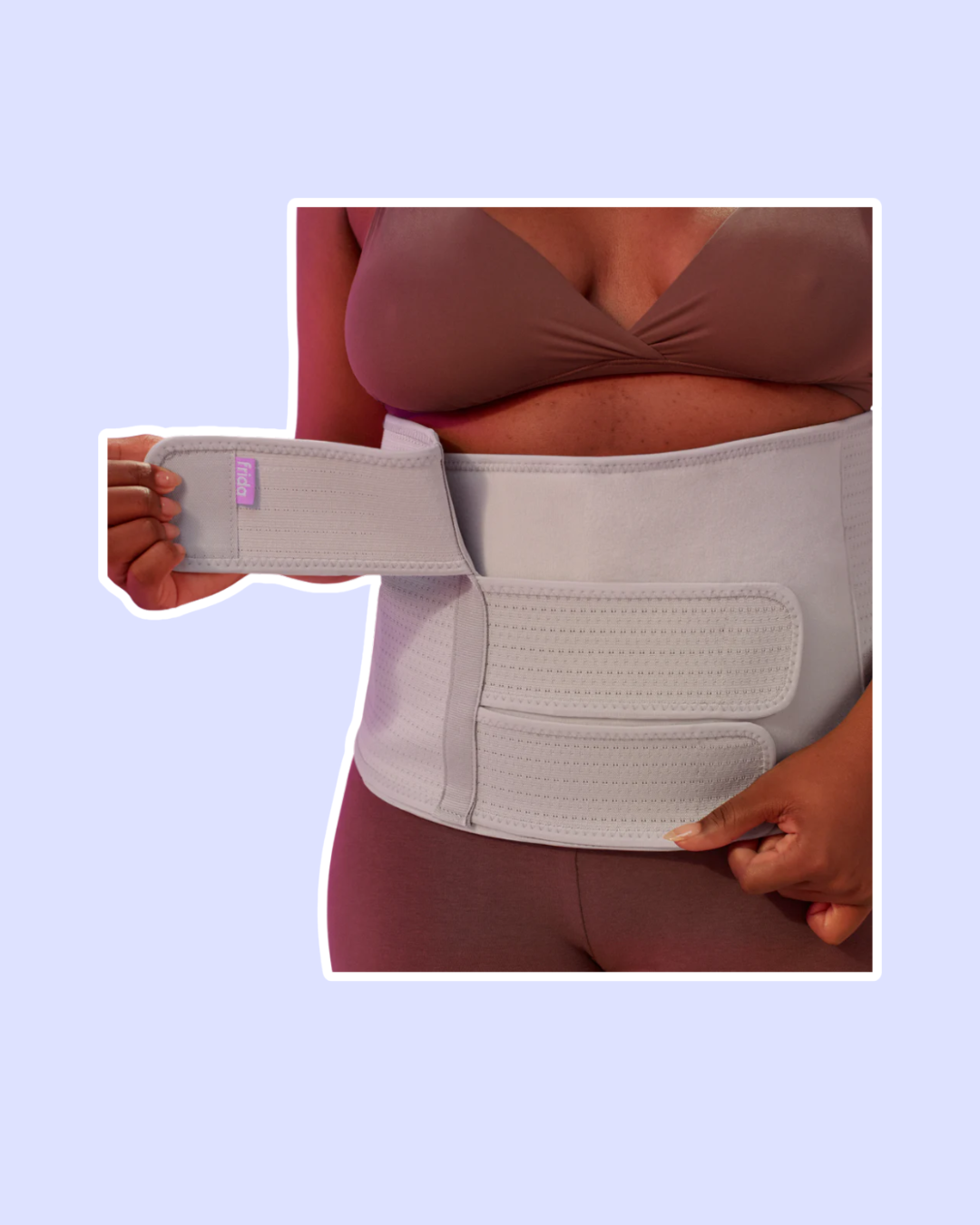
“Held me in and gave me a sense of comfort early postpartum” - Abi, 1 month postpartum
Loved for:
Real comfort and stability in the first postpartum weeks
Adjustable compression you can dial up or down as you heal
Especially helpful for cesarean recovery movement
Keep in mind:
Not a replacement for rebuilding core strength
Long-term wear can encourage your deep core to check out
Too much compression pushes pressure downward onto your pelvic floor
Key details: Adjustable compression binder designed for the early postpartum period.
Best Everyday Support: CRZ YOGA Maternity Leggings
The most-used support tool in your drawer is the one you put on every morning. A good over-the-bump waistband gives light, even support without the pressure points a tight band creates.
This matters more than people realize. Waistbands that dig into your belly increase downward pressure on your pelvic floor, and you feel that by the end of the day.
These hold their shape, don't roll down mid-class, and are comfortable enough to wear from a prenatal yoga session to school pickup.
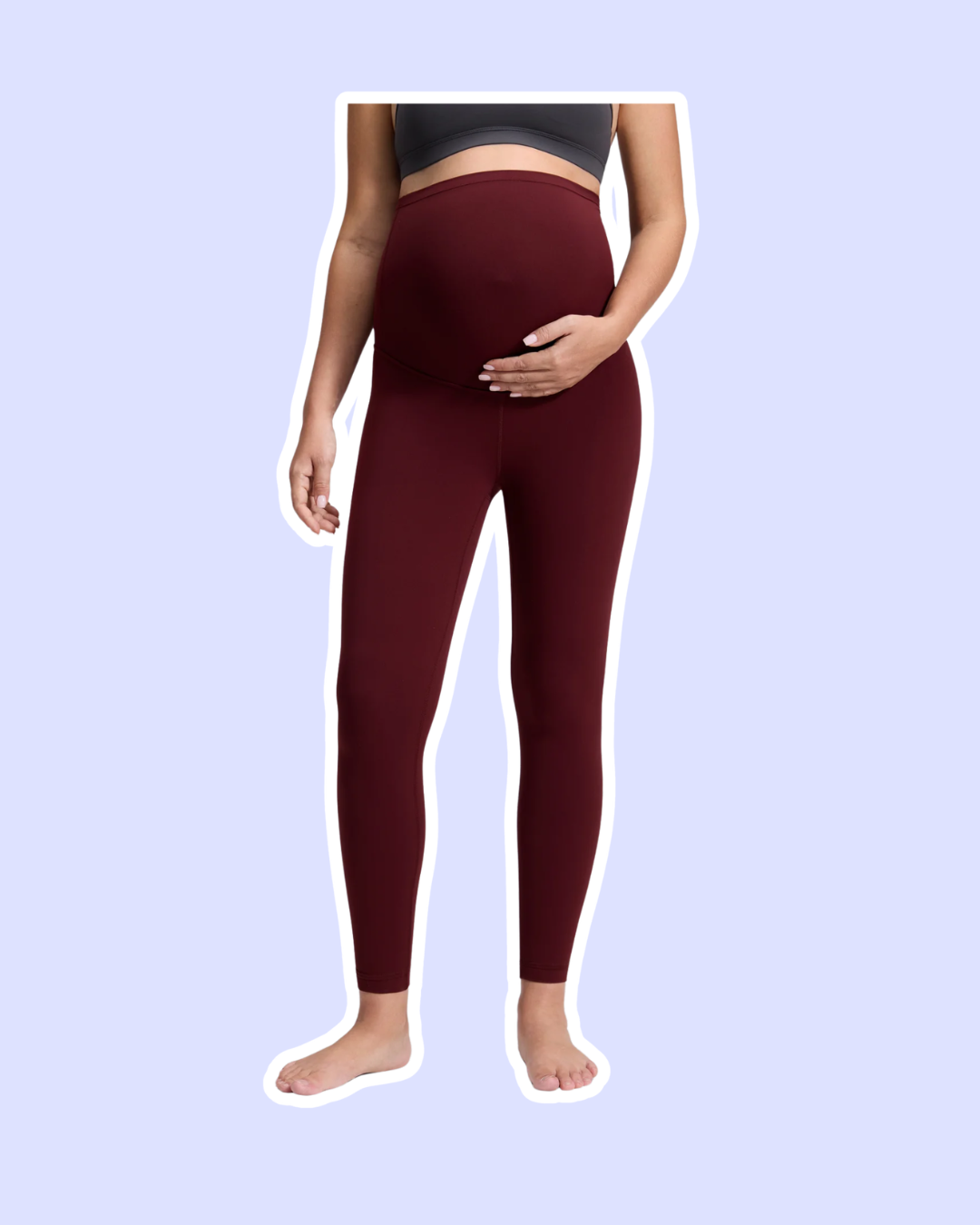
“I’ve got like 8 pairs” - Kailey, 2nd trimester
Loved for:
Full over-the-bump panel with no digging waistband
Squat-tested opacity you don't have to think about
Comfortable enough for a workout and for the rest of the day
Keep in mind:
Fit changes trimester to trimester, so read the size guide carefully
Maternity sizing runs differently than the brand's regular leggings
Key details: Over-the-bump waistband, available in multiple inseam lengths and colors.
Best for Sitting Comfort: CloudBliss Donut Pillow
Sitting is the underrated postpartum challenge. If you're recovering from tearing, stitches, hemorrhoids, or just general swelling, a hard chair is its own kind of misery.
A donut pillow's center cutout takes direct pressure off your perineum and tailbone so you can sit without bracing. It's especially worth it if you're driving regularly or heading back to an office early postpartum.
Sitting comfortably also means sitting upright, and better sitting posture is better for your pelvic floor than sinking into a slouch on the couch.
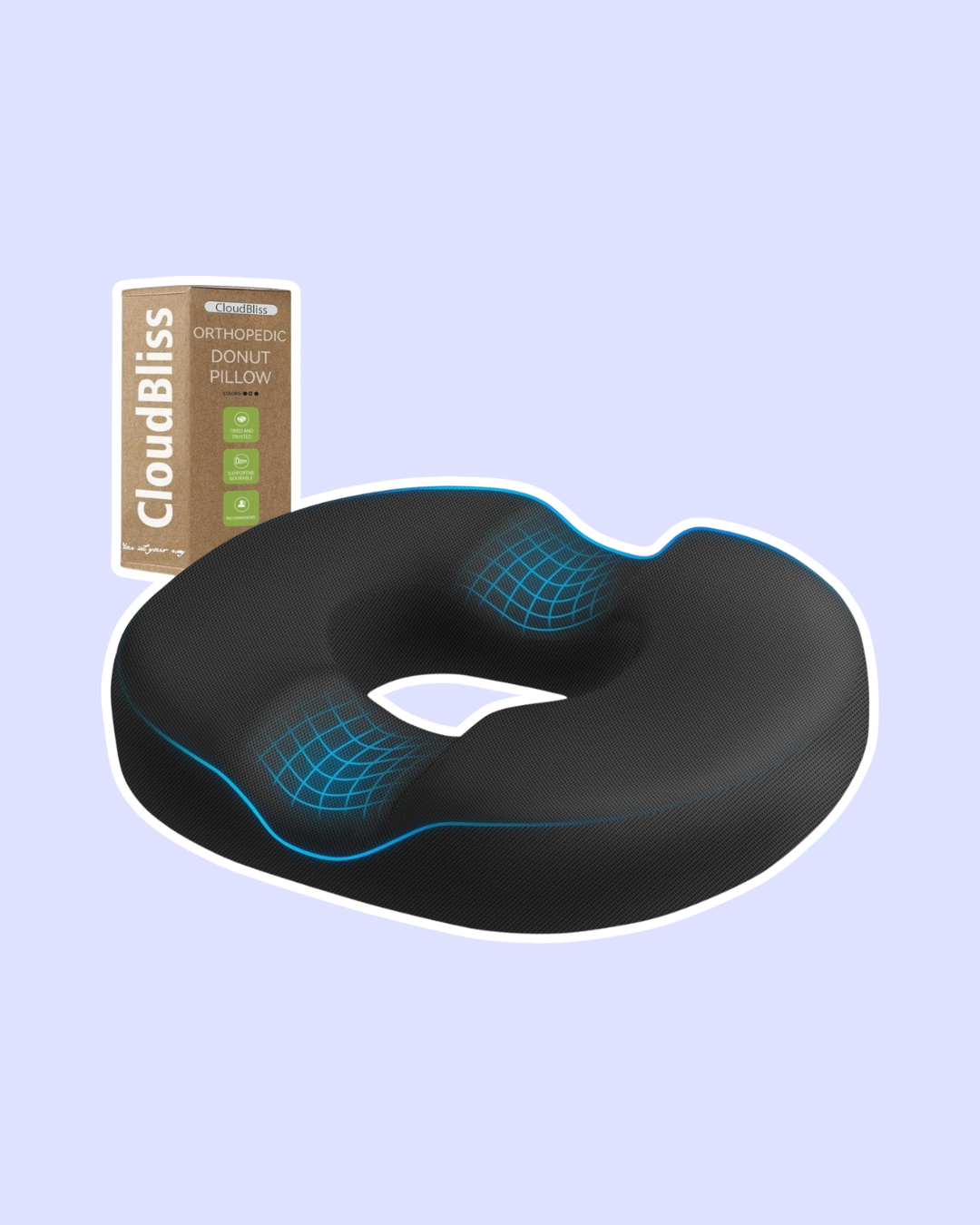
“I use it the most in the car and in the office.” - Joy, 3 months postpartum
Loved for:
Takes direct pressure off a sore perineum and tailbone
Portable enough for the car, the office, or a friend's house
Removable cover for the inevitable washing
Keep in mind:
Bulky to carry around discreetly
Most moms only need it for a few weeks, so it's a short-term buy
Key details: Cushion with a center cutout and a removable, washable cover.
How to Choose Core and Pelvic Floor Support
Start with what you're actually solving. Belly heaviness during pregnancy points to a belly band. Feeling disconnected from your core points to tape. Painful sitting points to a donut pillow.
Match the tool to your stage. Belly bands and maternity leggings are pregnancy tools. Binders and donut pillows are early postpartum tools. Tape works across both.
Choose cueing over squeezing when you can. Tools that remind your body to engage build awareness. Tools that hold you in place can let your deep core coast.
Set an end date. Compression garments in particular are meant to be temporary. Decide up front roughly how long you'll use one.
Comfort wins. Support you can't stand wearing does nothing for you.
What Support Tools Can and Can't Do for Your Pelvic Floor
Here's the piece most product roundups skip. Your pelvic floor works as part of a system with your diaphragm, deep abdominals, and back. Pressure has to be managed by that system, not just contained from the outside.
That's why over-tight compression can backfire. Squeeze your abdomen hard enough and that pressure has to go somewhere, and where it goes is down onto your pelvic floor. Which is exactly the tissue you're trying to protect.
External support is best used as a bridge. It makes movement possible and comfortable while you rebuild the strength that will eventually replace it. The goal is always to need less of it over time.
The strength part comes from consistent, well-cued breath and core work, which is exactly what I teach inside my prenatal yoga and pelvic floor course. Support tools make the days easier. Training is what makes the change last.
FAQ
Do belly bands weaken your core?
Not on their own, but relying on one all day can. Your deep core adapts to whatever it doesn't have to do, so use a band for demanding activities and let your own muscles work the rest of the time.
How long should I wear a postpartum binder?
Most moms use one for the first few weeks, mainly for comfort and stability. Wear it while it's genuinely helping, then start weaning off as you begin gentle core and breath work so your own muscles take over.
Can compression garments make pelvic floor symptoms worse?
Yes, if they're too tight. Strong compression around your abdomen pushes pressure downward onto your pelvic floor, which can worsen heaviness, leaking, or prolapse symptoms. Support should feel like a hug, not a squeeze.
Does KT Tape actually help with core engagement?
It helps by giving you feedback, not by holding anything in place. The stretch of the tape against your skin cues you to draw your core back in, which builds awareness over the course of a day in a way that one workout can't.
What's the difference between a pregnancy belly band and a postpartum binder?
A belly band lifts and supports the weight of your growing bump during pregnancy. A postpartum binder provides compression and stability to your midsection after birth. They're built for different jobs and aren't interchangeable.
Whatever stage you're in, support tools are a helping hand, not the whole plan. If you want the strength work that goes underneath all of this, come join me inside the Ima Yoga Method prenatal course. And if this list helped, share it with a mom friend or come say hi on Instagram. 💛